how to choose food beverage labels, FDA compliant food labels, freezer resistant food stickers
In the food and beverage industry, self-adhesive labels are more than just branding tools—they serve as the primary medium for communicating safety information, ensuring regulatory compliance, and maintaining product integrity throughout the supply chain. From the production line to the consumer’s hands, labels must withstand harsh environments while remaining legible and compliant. This guide breaks down the critical factors in selecting the right self-adhesive labels, focusing on two non-negotiable pillars: compliance with global regulations and uncompromising durability.
Pillar 1: Regulatory Compliance – The Non-Negotiable Foundation
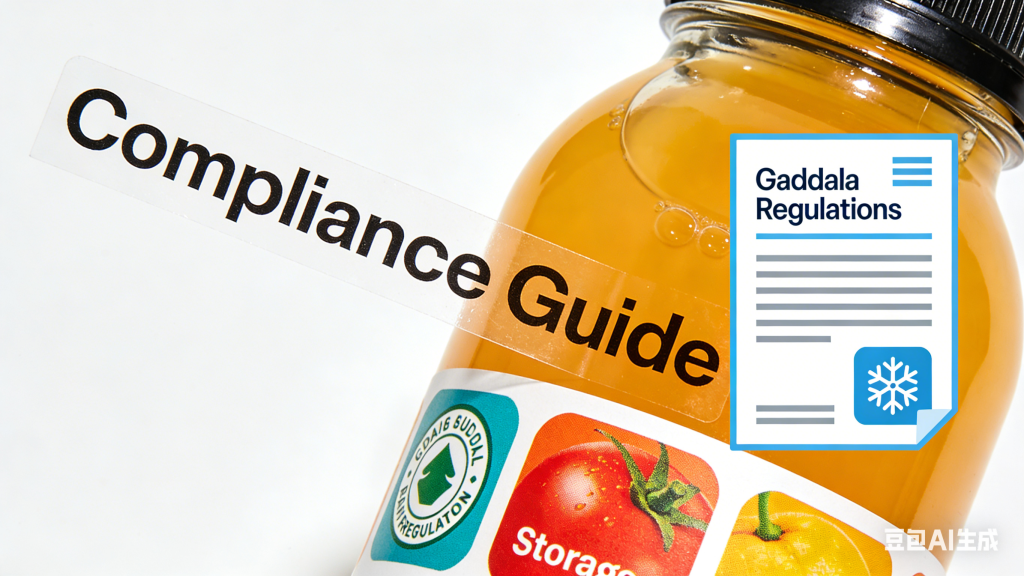
Compliance is the cornerstone of food and beverage labeling. Labels that fail to meet regional or international standards can result in costly recalls, market bans, and damage to brand reputation. With the global rise of digital labeling, regulatory frameworks are evolving rapidly—making it essential for businesses to stay updated on the latest requirements.
1.1 Navigate Regional Regulatory Landscapes
Different markets have distinct mandates for label content, format, and even digital presentation. Understanding these nuances is critical for cross-border sales:
China: The updated National Food Safety Standard for Prepackaged Food Labeling (GB 7718-2025) officially incorporates digital label requirements. Enterprises may voluntarily use digital labels, but must clearly mark “digital label” near the QR code or identification code. Mandatory information (e.g., ingredients, expiration dates) must be displayed directly on the first page after scanning, without pop-up ad interference. Pilot programs already cover staple foods like grain, oil, and meat products.
EU: While electronic labels are not yet integrated into the core (EU) No 1169/2011 regulation, sector-specific rules apply. For example, wine producers can use QR codes for full nutritional information (per (EU) 2021/2117), but energy values and allergen warnings must still appear on the physical label. Fishery products also allow QR code-based information disclosure under (EU) No 1379/2013.
United States: The FDA currently mandates digital labels only for vending machine foods (to display calorie information) and pharmaceutical products, but the use of QR codes for extended product details is growing voluntarily.
South Korea: Since November 2024, domestic foods have featured QR codes for “real-time food information services,” providing recall alerts, product certifications, and accessible formats for the elderly and disabled. This will expand to imported foods in 2025 and agricultural products in 2026. Only essential information (product name, net weight, storage instructions) needs to be physical; others can be digital.
Russia: As of March 2025, snacks (e.g., chips) require mandatory electronic labels, with condiments, spices, and vinegar following in July 2025. Importers must register in the official system to obtain digital labels for each unit package.
1.2 Prioritize Food Contact Safety
Labels in direct or indirect contact with food must use materials that do not leach harmful substances. Look for certifications like FDA approval for adhesives and inks, and ensure compliance with EU Regulation (EC) No 10/2011 for plastic materials. Key considerations include:
Avoid adhesives with solvent residues for oily foods (e.g., fried snacks) to prevent migration.
Use water-based or UV-curable inks (free of heavy metals and benzene) instead of solvent-based alternatives, which reduce VOC emissions by 90%.
For acidic products (e.g., pickles, citrus juices), avoid metalized films that may corrode and contaminate the product.
Pillar 2: Durability – Survive the Entire Supply Chain
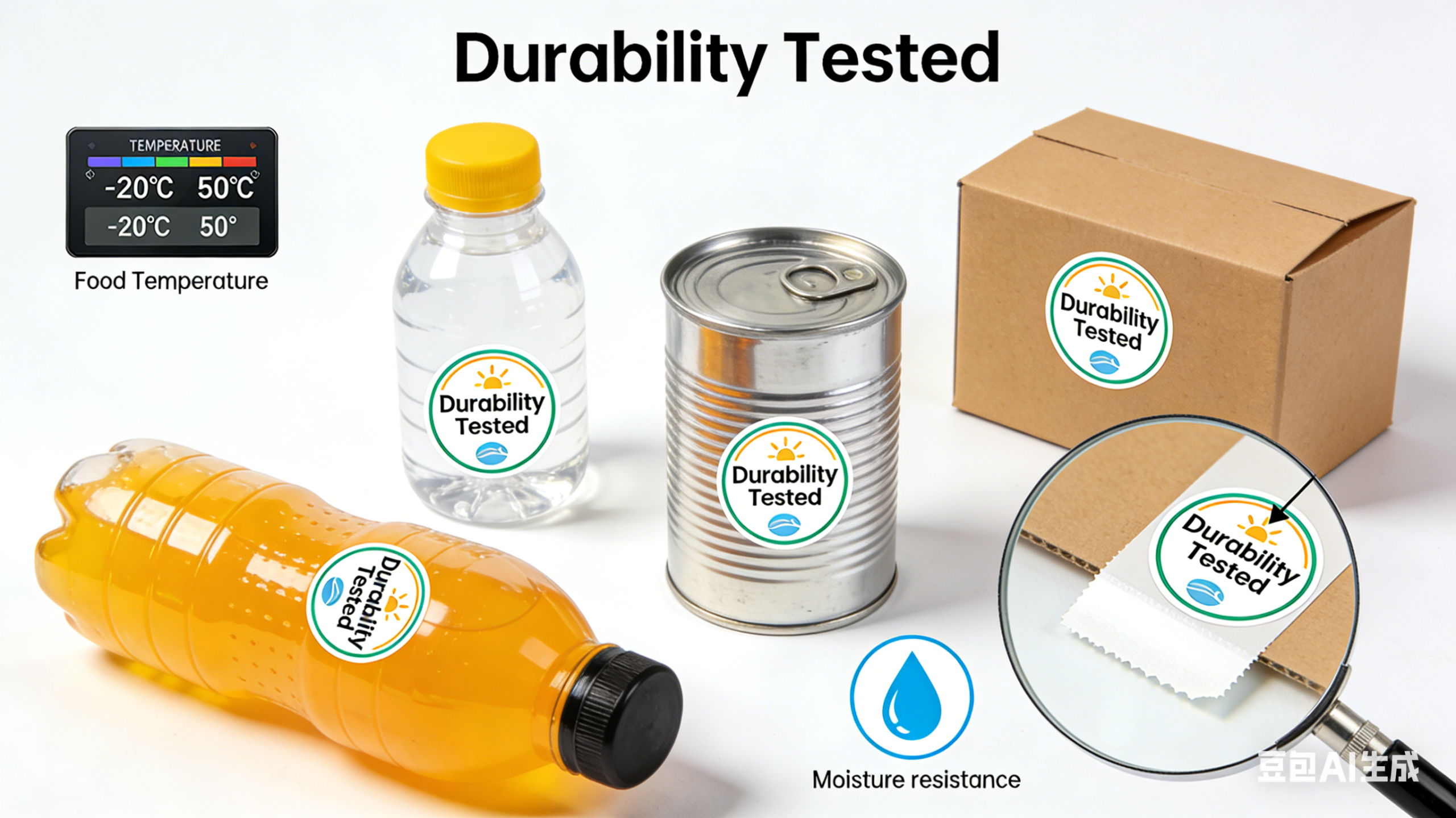
Food and beverage products face a gauntlet of challenges: extreme temperatures in cold chains, moisture from refrigeration, oil from processed foods, and physical friction during transportation. A durable label must maintain adhesion and legibility through all these stages.
2.1 Match Material to Product Environment
The label’s substrate, adhesive, and surface coating must be tailored to the product’s specific conditions. Common scenarios and solutions include:
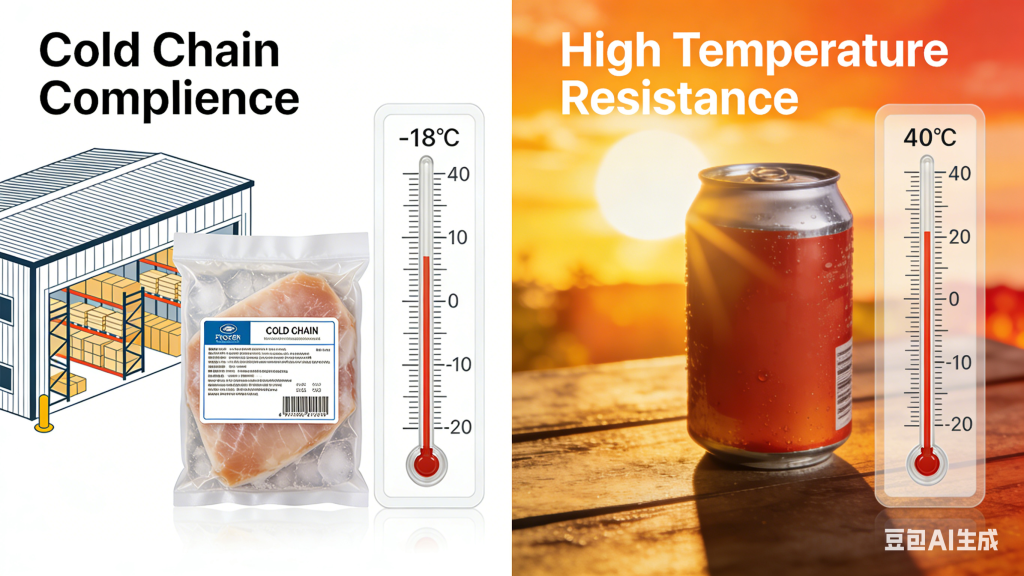
Cold Chain & Refrigeration: Temperatures as low as -20°C can make standard labels brittle and adhesive ineffective. Opt for “three-proof” (anti-freeze, waterproof, oil-resistant) thermal labels with modified acrylic adhesives. These labels resist condensation and frost, remaining intact even on frozen meats or dairy products. For example, XINWEI’s thermal labels maintain adhesion and legibility in sub-zero environments, reducing label failure rates from 25% to 2%.
High-Oil Products: Fried snacks, sauces, and meats can seep oil, blurring standard paper labels. Choose oil-resistant substrates like PET metallized film or coated synthetic paper, paired with pressure-sensitive adhesives that form a barrier against oil penetration. Guangdong Guanyang’s anti-oil labels have helped snack brands eliminate smudged information and consumer complaints.
Heat & Sterilization: Canned foods and retort-packed meals undergo 121°C sterilization. Select heat-resistant adhesives (meeting GB/T4851-2014 Grade 1 standards) that maintain adhesion for 72 hours without displacement. PET or BOPP substrates are ideal here, as they resist warping under high temperatures.
Transparent Packaging: For PET bottles (juice, water) or glass jars (jams), opaque labels obscure the product’s appearance. Transparent PET film (light transmittance ≥92%) or synthetic paper (≥85%) balances visibility with durability. A juice brand using this solution saw a 32% increase in shelf pick-up rates, as consumers could clearly see the product’s fresh color.
2.2 Reinforce for Logistics & Handling
E-commerce and global shipping expose labels to sorting machines, stacking pressure, and transportation vibrations. Enhance durability with these design choices:
High-Toughness Substrates: Synthetic paper made from polyethylene (with toughening agents) withstands drop impacts (1kg steel ball from 1m height) and tearing (longitudinal tear strength ≥50N/25mm). This reduces label breakage during transit by 90% compared to standard paper.
Anti-Scratch Coatings: UV varnish or lamination protects printed information from friction. In tests (500g pressure, 30 cycles/min), PET labels with UV coating showed no wear, while treated paper labels only faded slightly without losing legibility.
Anti-Drop Adhesives: “Shock-resistant” adhesives prevent label detachment during vibration. An e-commerce beverage brand reduced label loss from 12% to 0.5% by switching to this type of adhesive.
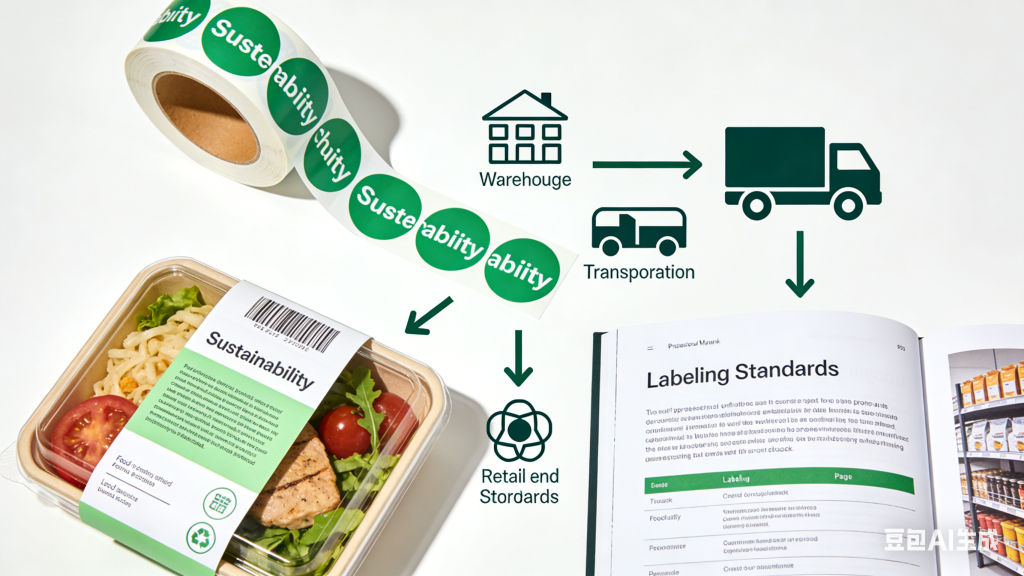
Once compliance and durability are secured, brands can leverage labels to enhance sustainability and brand value.
3.1 Embrace Sustainable Solutions
Consumer demand for eco-friendly packaging is driving the shift to green labels. Options include:
Renewable Materials: FSC-certified recycled paper, sugarcane-based PE, or PLA substrates.
Low-Impact Adhesives & Inks: Water-based acrylic adhesives and VOC-free inks.
Recyclable Structures: 100% recyclable glassine backing paper or monomaterial labels that match the packaging’s recyclability (e.g., PE labels for PE bottles).
3.2 Balance Performance & Cost
Cost efficiency does not mean compromising quality. Optimize spending by:
Matching Material to Value: Use economical coated paper for dry, short-shelf-life products (e.g., bread) and premium PET for high-end beverages or imported goods.
Long-Term Supplier Partnerships: Bulk purchasing or joint development can reduce costs for custom materials (e.g., anti-counterfeit labels).
3.3 Align with Printing & Branding
Ensure the label material works with your printing process: digital printing suits thin substrates (e.g., lightweight synthetic paper), while screen printing requires thicker materials (e.g., rigid PET). For branding, consider tactile finishes (e.g., matte film for premium chocolate) or transparent labels that let the product speak for itself.
Conclusion: A Holistic Approach to Label Selection
Choosing the right self-adhesive label for food and beverage products requires a balance of regulatory rigor, environmental resilience, and strategic branding. Start by mapping your target markets’ compliance requirements, then match materials to your product’s lifecycle—from production to consumption. Partner with suppliers who offer both certified materials and technical support (e.g., compatibility testing for high-oil or acidic products) to avoid costly mistakes.
In an industry where trust is paramount, a well-chosen label is more than a sticker—it’s a commitment to safety, transparency, and quality that resonates with consumers worldwide.
Newsletter Updates
Enter your email address below and subscribe to our newsletter