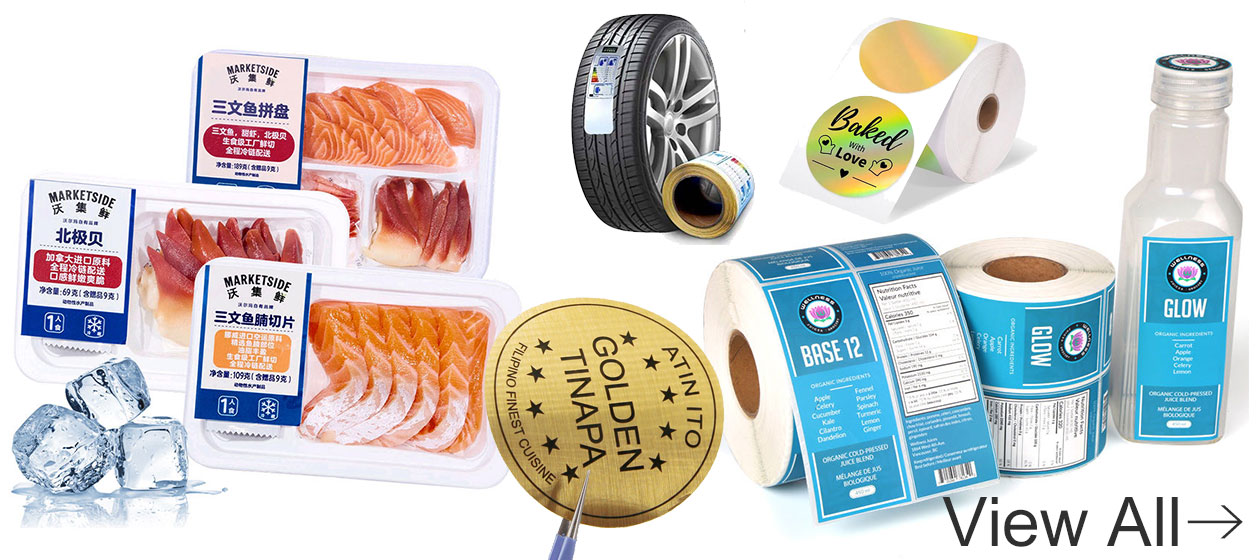
Adhesive stickers (also known as self-adhesive stickers or pressure-sensitive stickers) are versatile labeling solutions widely used across industries for product identification, branding, information display, and decorative purposes. Characterized by their self-adhesive backing that eliminates the need for additional glue, they offer convenience, durability, and customization flexibility—making them a staple in packaging, retail, healthcare, cosmetics, and household goods sectors. Below is a detailed overview of their core components, materials, types, applications, and key considerations.
1. Core Structure of Adhesive Stickers
A standard adhesive sticker consists of three essential layers, each contributing to its performance:
Face Stock (Top Layer): The visible surface for printing, branding, or information. It determines the sticker’s appearance, durability, and compatibility with printing technologies.
Adhesive Layer (Middle Layer): The bonding component that adheres the sticker to substrates (e.g., plastic, glass, paper, metal). Its viscosity, removability, and resistance to environmental factors (moisture, temperature) vary by type.
Liner (Bottom Layer): A protective backing (typically silicone-coated paper or film) that keeps the adhesive intact until application. It is peeled off during use to expose the adhesive.
2. Common Materials (Face Stock & Adhesives)
2.1 Face Stock Materials
The choice of face stock depends on application requirements (e.g., durability, printability, environmental resistance). Popular options include:
Material Category
Types & Features
Typical Applications
Paper-based
– Coated Paper: Smooth surface for high-quality full-color printing; cost-effective.- Mirror-Coated Paper: High-gloss finish for premium branding.- Thermal Paper: Heat-sensitive, ideal for price labels and retail tags.- Tamper-Evident Paper: Breaks easily upon removal, suitable for anti-counterfeiting seals.
Mass-market personal care products, food labels, retail price tags, pharmaceutical seals.
Film-based (Synthetic)
– PE (Polyethylene): Flexible, water-resistant, available in transparent/matte/white.- PP (Polypropylene): Stiff yet durable, resistant to oil and chemicals; BOPP (biaxially oriented PP) is widely used for high-performance labels.- PET (Polyester): Heat-resistant, tear-resistant, and suitable for harsh environments (e.g., high temperatures, chemicals).- PVC (Polyvinyl Chloride): Waterproof, flexible; PVC shrink film is used for battery labels.- Laser Holographic Film: Iridescent, premium finish for decorative or anti-counterfeiting labels.
Adhesives are classified based on viscosity, removability, and environmental resistance:
Permanent Adhesive: Strong bonding for long-term use; leaves residue if removed. Suitable for product labels, branding, and packaging.
Removable Adhesive: Low-tack formula that peels off cleanly without residue. Ideal for temporary labels (e.g., fruit tags, promotional stickers, household appliance labels).
Washable Adhesive: Resists water and cleaning; remains intact during washing but can be removed without residue. Used for beer bottles, tableware, and food containers.
High-Temperature Resistant Adhesive: Withstands extreme temperatures (e.g., microwaves, industrial equipment). Suitable for labels on kitchen appliances or mechanical parts.
Oil/Chemical Resistant Adhesive: Resists oils, solvents, and chemicals. Used for labels on cleaning products, automotive parts, or industrial supplies.
3. Manufacturing & Printing Processes
3.1 Key Manufacturing Steps
Material Preparation: Select face stock, adhesive, and liner based on application needs.
Coating: Apply adhesive to the face stock (or liner) using precision coating technology.
Lamination (Optional): Add a protective film (e.g., matte, glossy, or UV-resistant) to enhance durability and print quality.
Die-Cutting: Cut the material into custom shapes (circles, squares, logos) using die-cutting machines.
Printing: Apply designs, text, or barcodes using suitable printing methods.
3.2 Printing Technologies
Digital Printing (Inkjet/Laser): Ideal for small batches, custom designs, or variable data (e.g., barcodes, serial numbers). Offers fast turnaround and high resolution.
Flexographic Printing: Suitable for large-scale production (e.g., food packaging labels). Cost-effective for high-volume orders with consistent designs.
Gravure Printing: Delivers high-quality, detailed prints for premium labels (e.g., cosmetics, wine bottles).
Thermal Transfer Printing: Uses heat to transfer ink onto the face stock; durable and compatible with synthetic materials (e.g., PE, PET). Common for industrial or retail labels.
4. Key Features & Advantages
Convenience: Self-adhesive design allows instant application without additional glue or tools.
Customization: Available in various sizes, shapes, colors, and finishes (matte, glossy, holographic) to meet branding needs.
Durability: Resistant to water, oil, chemicals, and temperature variations (depending on material and adhesive type).
Versatility: Adheres to most substrates (plastic, glass, metal, paper, wood) and suits diverse industries.
Cost-Effective: Efficient production processes reduce costs for both small and large batches.
Automotive & Industrial: Labels for car parts, machinery, and industrial equipment (chemical-resistant and durable).
6. Selection Considerations
When choosing adhesive stickers for your business, consider the following:
Application Environment: Temperature, moisture, oil, or chemical exposure (e.g., waterproof materials for beverage labels).
Substrate Type: The surface the sticker will adhere to (e.g., smooth vs. rough, plastic vs. metal).
Durability Requirements: Short-term (promotional stickers) vs. long-term (product branding).
Printing Needs: Design complexity, color accuracy, and batch size (e.g., digital printing for custom designs).
Regulatory Compliance: For food, pharmaceuticals, or cosmetics, ensure materials meet safety standards (e.g., FDA approval for food contact).
Removability: Whether the sticker needs to be peeled off cleanly (e.g., rental equipment labels) or remain permanent.
7. Trends & Innovations
Eco-Friendly Materials: Biodegradable paper, recycled synthetic films, and water-based adhesives to reduce environmental impact.
Smart Stickers: Integration of QR codes, NFC chips, or RFID tags for interactive experiences (e.g., product information, loyalty programs, anti-counterfeiting).
Sustainable Packaging: Adhesive stickers compatible with recyclable or compostable packaging materials.
High-Definition Printing: Advanced digital printing technologies for sharper images, vibrant colors, and intricate designs.
Adhesive stickers continue to evolve as a critical component of product branding, packaging, and information dissemination. Their adaptability to diverse industries and customization capabilities make them an indispensable tool for businesses seeking to enhance visibility, compliance, and customer experience.
Newsletter Updates
Enter your email address below and subscribe to our newsletter